.
Punam Phuyal
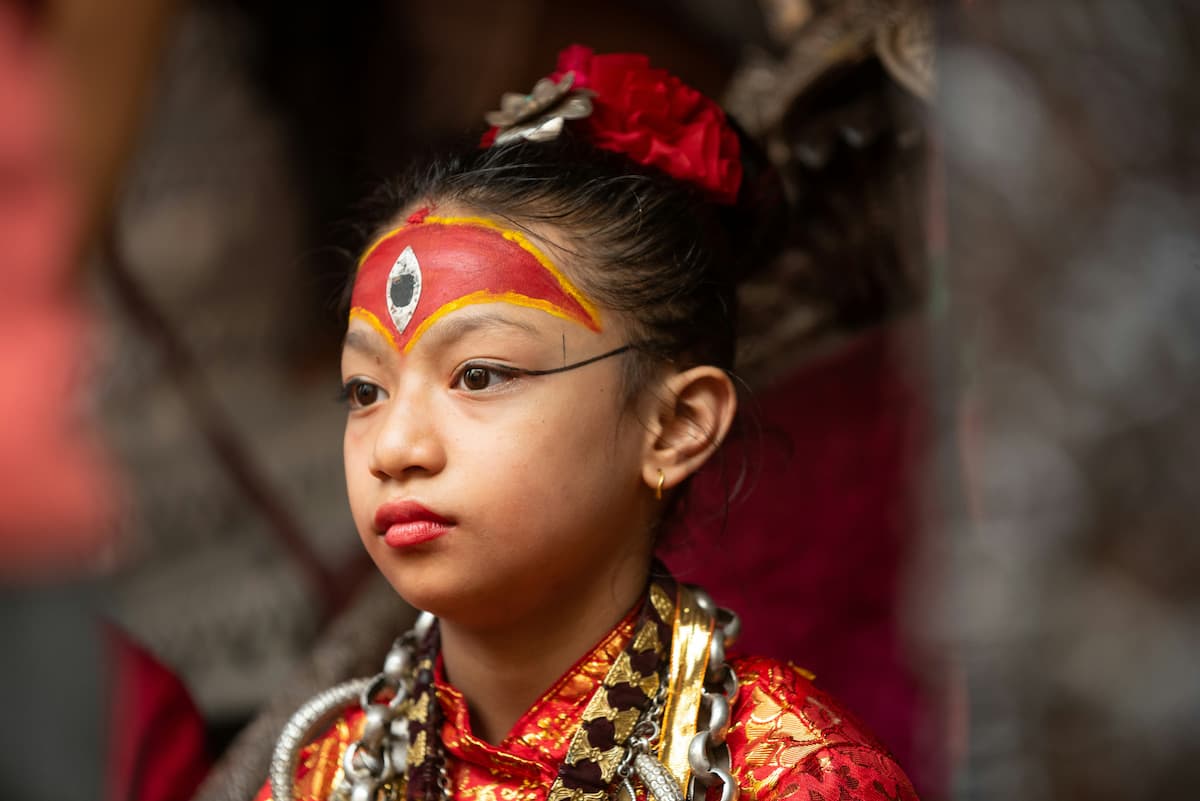

Kumari is related to Sakta sect of Hinduism that believes in divine power of female god (godess). The Sakta sect are the group of people who worship goddess (Durga) for salvation.
Worshiping goddess has been practiced since historical period of time. The venus of Hohle Fels proved that female goddess were being worshiped since ancient time. Female statue (nari murti) dating back to 1st, 2nd century are the evidence of the practice of worshipping goddess in past time as well.
Sakti (female) are the powerful beings who can reproduce, Even the earth is also considered as female since it grows and feed living beings. Thus, the Kumari ghar was built to worship living goddess, in respect of female, to show gratitude towards the divine power and fertility cult. This article is about Kumari and Kumari house of Kathmandu durbar square. It is an important historcal house one must visit in Kathmandu.
Kumari is the form of Parvati. The tymphanum of Kumari House consist the carving of Mahesmati devi which reflects the main deity to be worshiped in the house. The unmarries girl before getting mensuration are termed as Kumari.
Unmarried girls have been required in all rituals and religious activities since vedic period. Married female are called Devi whereas unmarried female are called Kumari. It is believed that the Kumari has divine energy until 16 years old.
The form of Kumari based on the age:
Form of Kumari based on caste, whom to worship for what?
Brahmin Kumari are worshiped for realization of wisdom
Chhetri Kumari are worshiped for success and victory
Vaishya kumari are worshiped for victory over enemies
Sudra Kumari are worshiped to get victory with illusion, attachment, eradication
Kumari Puja begin officially from late Medieval period (15th century to 18th century). Jaya Prakash Malla (1722 AD – 1768 AD), was the first king who begin the tradition of worshiping Kumari as living goddess.
Kumari puja is related with Taleju bhawani, the family god of Lord Ram. Taleju Bhawani was brought to Kathmandu valley by Nanyadev as a sacred jar.
King Prithvi Narayan Shah made Kumari house and worship sudra Kumari to get victory over enemies and successfully unified the present country Nepal. Since then, Kumari house is in use for Kumari.
Selecting Kumari follow special rituals which is live and rare culture. Few unmarried young girl of Sakya family from Newar community within 18 Bahal is selected. Her age should be around 3,4 years The young female child with following characteristics are selected for Kumari:
The selected girls are settled for puja and soul prestige of Talaju bhawani. The one girl in which the soul prestige of goddess Taleju Bhawani succeed is finalized as Kumari. Then She is kept in Kumati Ghar. Her life will change after turning into living Goddess. She should leave her house and settled in this Kumari Ghar. All expenses for day to life, schooling and medication will be done by Guthi sansthan (Government trust), Kathmandu metropolitan and rental of fields, buildings, shops of Guthi.
Kumari is worshipped everyday by Karmacharya priest in Kumari house. Beside daily rituals, she is worshipped 13 times a year in different festival and special time when uncertain events occurs in country.
The culture of Kumari and her puja is famous in Patan, Bhaktapur, Kathmandu and Nuwakot as well.
The age of Kumari does not matter until she gets mensuration. If her period begins then new Kumari should be selected. It is believed that the body of Kumari should be vergin and no blood have been flown out from her body. As soon as blood comes out from the body at any age, she will return back to her parents house and live her normal life. She will have all human rights and she could get married as well.
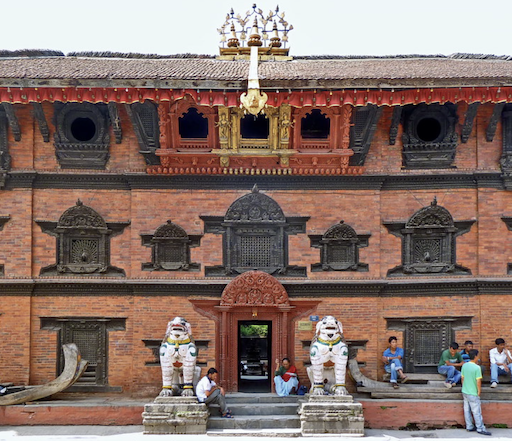
Kumari house is a traditional house called as bahal in the Newar community. It’s architecture similar to Buddhist vihar. It was built in 1757 AD, 18th century, late medieval period. It is located near the southern entrance of Kathmandu durbar square. There are two big lions as guard of the house to protect the goddess against evil.
It is three storey building with amazing wooden craft, teracort art, iconograpy and architecture. The central yard has stupa with Pancha dhyani Buddha, Bajra and Shree yantra representing power and symbolizing Shakta sect.
Stupa: Stupa is centrally located in the yard of Kumari ghar. The stupa is small and consists cemented trayadasabhuvan vermica and dome. There are pancha dhyani Buddha (Akchovya buddha in the east with Vusparsha mudra, Amithav buddha in the west with dhyan mudra, Amogsiddhi buddha in the north with Avaya mudra and Ratna sambhav in the south with barad mudra and vairochan buddha with chakra mudra in womb chamber, the center).
Shree yantra: It consist two triangles. One pointing downward represents matter (prakriti) and another pointing upward represents cosmic musculine principle. It is believed that we can get salvation fast while worshiping through it.
Vajra: It symbolize the nature of reality in Vajrayana. It represents endless creativity and skillful activity.
Kumari is settled in send floor of Kumari house just behind the thee windows whereas Pancha Buddha are worshipped in ground floor by Bajracharya priest.
The story of Kumari dates back to 300 years ago, the event occurred during Malla Dynasty. Nepal was not unified and Kathmandu was a state being ruled by Jaya Prakash Malla. The Taleju temple was already established in Kathmandu durbar square. King was very religious and believes in diety. He used to worship Taleju bhawani for power, prosperity and protection. It is believed that goddess bhawani became pleased and incarnated in the form of beautiful female and start meeting king during night. She asked king to promise that he will not share about her to anyone not even the queen. She used to play dice with king till midnight and give advice to make the state more successful. Thus, king spend time with the female by playing dice until late night. Then queen was unhappy to see the behavior of the king. She started following the king and see inside the room. She listened female talking inside the room and opened the door. She was surprised to see such beautiful and bright women in the room. As soon as goddess Bhawani saw queen she disappeared from the room.
After then many bad events occurs in the state, whole kingdom deep in sorrow. Seeing all these unusual activites King start puja of Taleju Bhawani and continued for long time till she appears infront of him. She said that she is unable to come again in the form of human as before but she promised that she will incarnate in the form of Kumari and always be in the state for its wellness. Since then Kumari was established and believed to be Taleju Bhawani who blessed the nation.
Kumari is the living goddess. She is the incarnation of Talaje Bhawani, a form of devi Parvati. Both Buddhist and Hindu worship Kumari. It is believed that Kumari puja is very important for the peace in nation. If she cries or laughed during her puja, it manifest worse situation will come in nation. Her expression will predict the upcoming event in the country. As Nepal is rich in culture, this living culture of worshipping living goddess is unique and beautiful which shows respect to female. This culture taught human to admire girls as they are powerful and can make our world beautiful with their love, care and creation.
...