Punam Phuyal
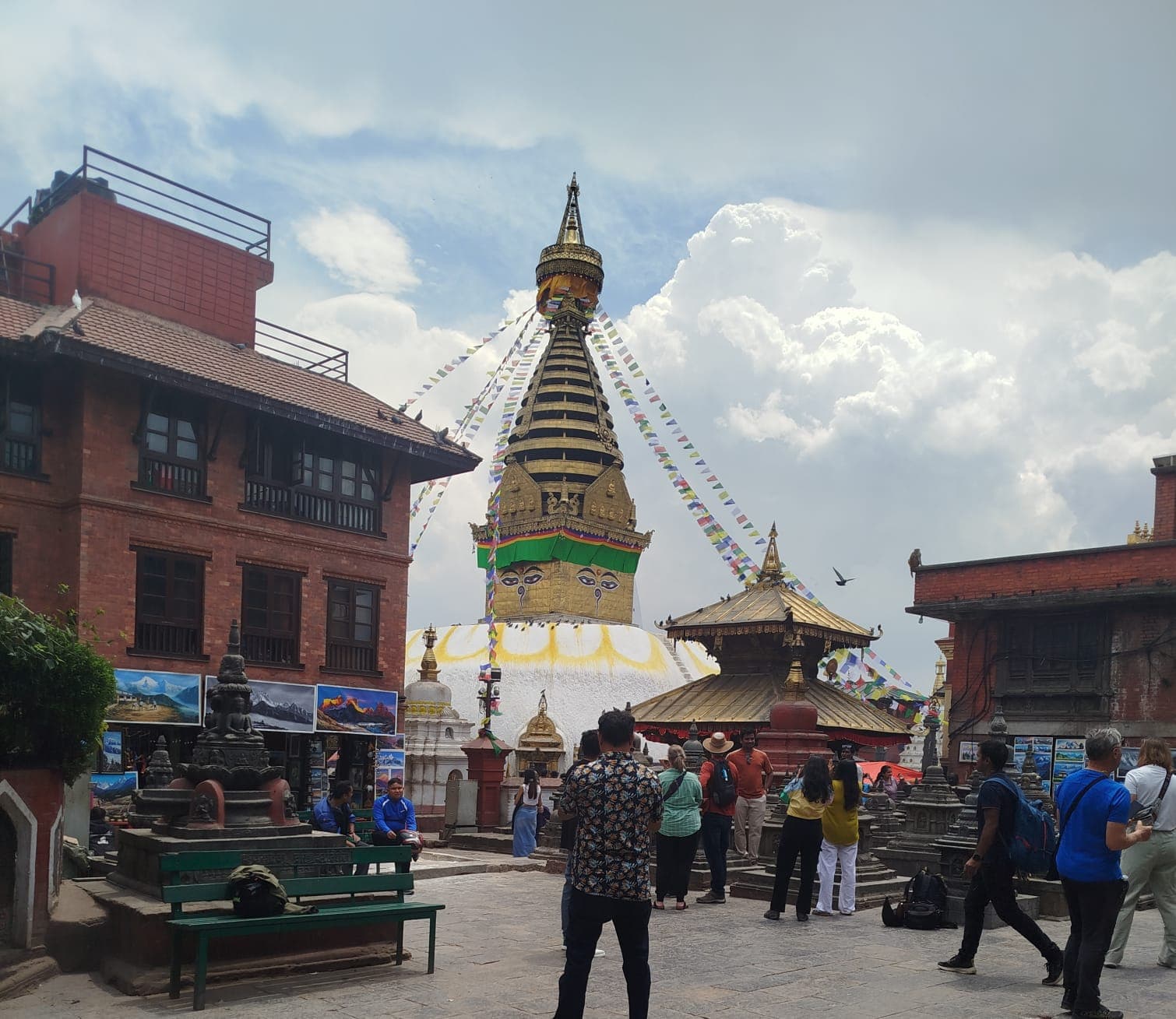

Among different name of Brahma, Swayanbhunath is one. Literally the word Swayambhunath means self originated. It has different names like songu, Padmagiri, Gobrichya (like tail of cow), Goshringa (like two horns of cow) Shembo etc. It is both naturally and culturally important place to visit. We can see good view of Kathmandu and mountains in clear weather. It is a view point of Kathmandu. Variety of plants alongwith some endangered species are also found in the forest around Swayambhu. Thus, it is very important place for botanical study. Similarly, a variety of birds are also found here. Even the birds from different parts of the world come here. Therefore it is an important place for birdwatching and the study of birds as well.
According to Swayambhu Puran, In satya yug, Bipasbii named Buddha came in this place/hill which was hidden inside the water. It was a pond. He planted the seed of lotus in the centre of pond named Nagdaha. After six months of plantation, large and big Lotus and immortal flame came out and it became an important deity culturally.
Buddha, Rishi Muni, Sadhu and Shanta, intelligent people from different part of the world came to see the Lotus and flame. The story of flame and lotus was heard by Manjushree in China as well. After then he came to Kathmandu. He covered the lotus and flame by developing stupa on it which is called Swayambhunath today. Then he cut the water from the Katwal and make the area suitable for settlement. He extended the settlement upto Gujeshwori. Then he make Dharmakar as the first king of Nepal.
Swayambhunath was founded before Buddhism. The Swayambhu puran mentioned that all Buddhas (Sakyamuni, Kanakmuni, Krakuchanda, Sikhi and all other Buddhas) has came to get glimpse of Swayambhunath. it’s date of existance is ancient and not recorded by human. It is believed that the event occurs in Satyayug. These stories was written in 13th and 14th century. Still there is no proof to know how these stories came.
Hindu story: Krishna came from North. Badasur make the valley full of water. Later on, Gwala came to Nepal and let the water pass out from the valley and settled here.
The king named Prachandadev came from India to Swayambhunath and became impressed with its beauty. Instead of returning back he stays there and keeps on meditating. Later on, he became popular with the new name Shantikacharya. He was the teacher of Bandudatha, an expert tantrik. He was alive until Bandudatta goes India to bring Machindranath.
Santikaharya established five pur for the protection of Swayambhunath. These pur are: shantipur, Agnipur, Bayupur, Basupur and Nagpur. He made large stupa to protect the self originated Lotus and flame. It is believed that he is alive inside Shantipur. Also, If we bring the Thanka written with blood of serpent from Shantipur, the rain fall will occur even in drought condition.
In context of Nepal, Buddhism had developed since Kirat dynasty. It was introduced between 1st and 2nd century. There was good development of statue and inscription in Lichhivi period. Swayambhunath was developed as popular pilgrimage site. The genealogies written by Jayasthiti Malla in 14th century mention about Swayambhunath in it.
There was big attack in Swayambhu chaitya in 1349 AD by Samsodhin. The Swayambhu chaitya was broken in that attack. It was rebuit by Harshaballav Bharo after 12, 13 years of attack. It was renovated in 14th century. The renovation was done by Pratap Malla, Jayasthiti Malla, Bhupatindra Malla and Tibetan Lama.
The present Swayambhu stupa was rebuilt in the 18th century during the period of Rajendra Bikram. Maintainance and conservation work is continuing today as well. Proper protection started after being listed in UNESCO world heritage site in 1976 AD.
There are many historical and cultural deity in Swayambhunath area. We can see monument and statue fom Lichhivi dynasty to 19th century. It has evidence of each period of Nepal which reflects the development and change in art and architecture with time. It holds a history and shows the continuity of culture from ancient time. All stupa present in Swayambhu been completely built until the 20th century.
Traditionally the big dome of Swayanbhu has lotus and falme in its primary sanctum/ womb chamber. Rest of the part is solid. There are Panchadhyani Buddha in four direction.
East – Akshyvya
West - Amitav
North – Amogsiddhi
South – Ratnasambhav
Northeast corner- Bairochan
...