Punam Phuyal
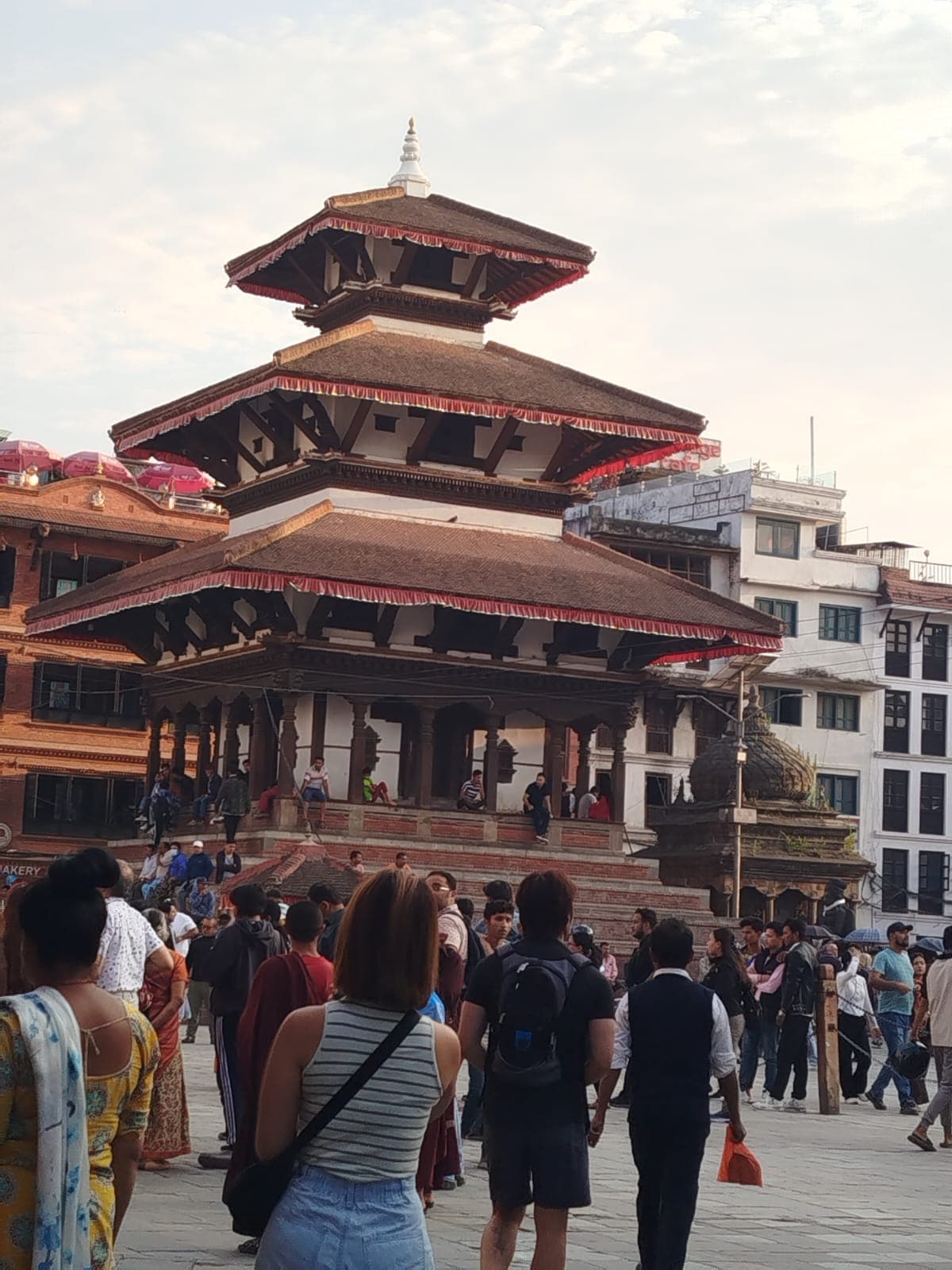

The nearest destination of heritage tour from Thamel is kathmandu durbar square. It is 1.6 km from thamel. It is most amazing place to explore ancient palace, iconography, terocort art, woodencraft and culture of Nepal.
Kathmandu durbar square is situated in the heart of Kathmandu inside Hanumandhoka. There was settlement in this area since Kirat dynasty as found in some old inscription. It is believed that there was dense population in Licchavi dynasty. The north and south coliagram of Kasthamandap was the core area of Kathmandu based on the inscription. It was the junction of administrative work at that time.
The northern side of Kasthamandap was called Yangal and southern side was called Yambu in medieval period. King Ratna malla built the palace in Basantapur called as prosperous city. He was the first king of Kantipur state. The palace was made bigger and many temples were built by Mahendra Malla. Some of them still exist today. The last and extensive spread of palace takes place in Pratab Malla’s time. There were 25 court yards including Bhugol park and Vishal Bazar which are not a part of Kathmandu durbar square in present day. The palace was called Hanuman Dhoka durbar square from 1672 AD before that it was called Gunpo Palace.
Total 13 Malla king ruled the state. Jay Prakash Malla was the last king of the Kantipur. Shah dynasty begins after Prithivi Narayan Shah conquered Mallas of Kathmandu and unified the country Nepal.
Prithivi Narayan Shah, Pratap singh shah, Rada bahadur Shah, Rajendra Bir Bikram Shah, Surendra Bikram Shah, Trailokya Bikram Shah and Prithivi Bir Bikram Shah also stay in this palace. After then Narayan hiti palace was built and royal family leave Bastantapur durbar. Then the Durbar square was established as a cultural heritage site.
Basantapur dubar square consist varied architectures of three Dynasty: Malla, Shah and Rana. Nasal chowk was built in Malla’s period, Basantapur palace was built by Shah and the white building (Gaddi baithak) was built by Rana dynasty.
Kathmandu durbar square was turned into cultural complex in 1951 AD. Later on it was listed as cultural heritage site in 1979 AD.
The major touristic destination of Kathmandu durbar square are:
Tribhuvan memorial museum
Mahendra mermorial museum
Birendra memorial museum
The major court yard of Kathmandu durbar square are:
North side of Nasal chowk: Mohan chowk, sundari chowk, Mul chowk, Nag Pokhari, Trisul chowk, Loham chowk, Bhandarkhal chowk, Dashain ghar chowk
South side of Nasal chowk: Dakh chowk, Bayu chowk, Masan chowk, Nutche chowk, Lamo chowk
The major Jatra and festivals celebrated in Basantapur durbar square:
The Bashantapur palace is cultural place where various festivals and Jatra are celebrated annually. The major festivals are:
Daishain, Gaijatra, Indrajatra, Changunarayan Jatra, seto Machindranath jatra, Pachali Vairav Jatra, Guyeshwori jatra, Bhagwati jatra, Dumaju jatra, holi, Bashanta shrawan jatra and Kumari jatra.
Dashain and Indra Jatra are the biggest Jatras of the year. Dashain is celebrated for 10 days and Indra jatra was celebrated for 8 days.
Basantapur durbar square is cultural complex with more than 48 buildings and structures. Each of them has significance for particular culture and history. Short briefing let us to understand the importance behind its conservation and existence.
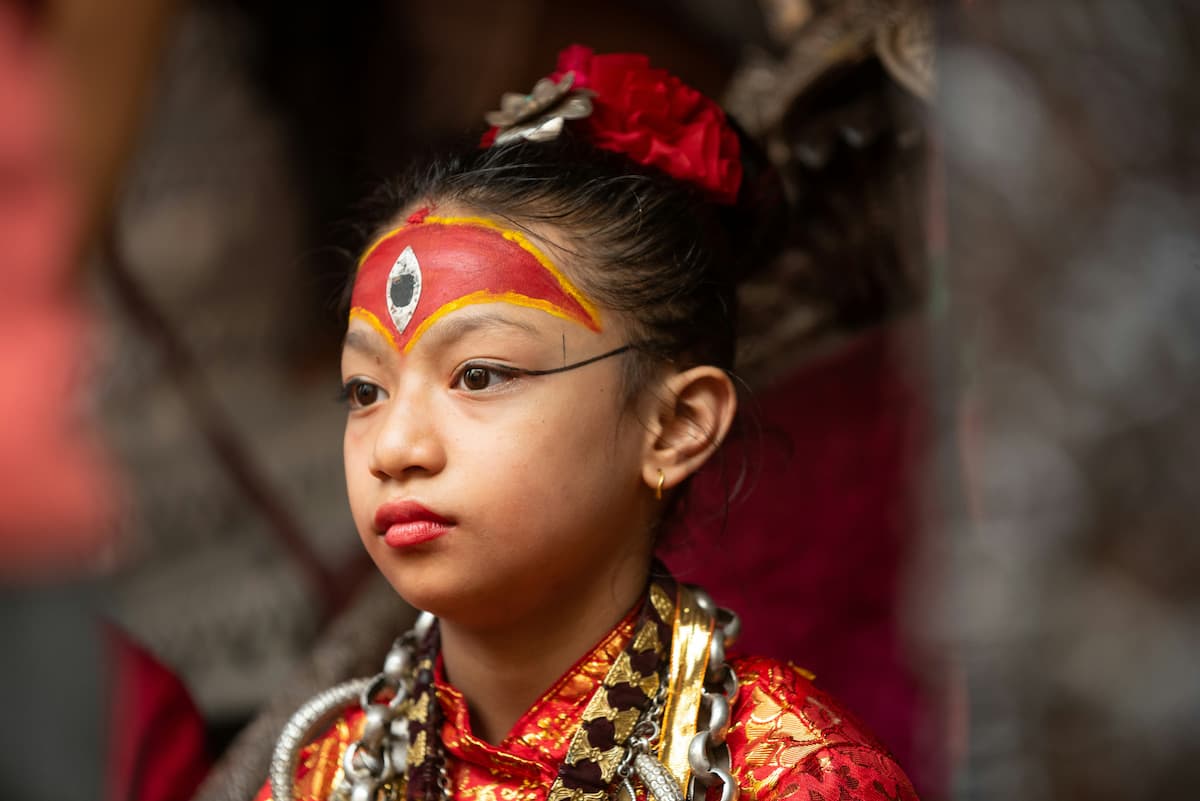
Kumari ghar is a religious temple where goddess Kumari and Pancha Buddha are worshipped every day. It was built by Prithivi Narayan shah in 18th century. It is popular for its amazing wooden craft, teracort art and iconography. It is bahal with interior design as similar to Buddhist Bihar.
The Shiva temple is a beautiful temple in Shikhar style. It is made from mud and brick. There is sada Shiva Linga in the inner sanctum. The temple was renovated after being collapsed in earthquake 2015 AD.
Singha sattal is traditional house made from the wood of Kasthamandap. The metal lions on the four corners of the roof gives the Singha sattal for the house. It is being used as the municipality office. The building dates back to 17/18 century.
Kavindrapur was build by king Pratap malla in 17th century to please Narasimha. It was built for travelers passing through the city. The main purpose of the building was to rest and overnight stay.
The word Kasthamandap is related to the name of the city Kathmandu. It is the oldest asset of Kathmandu durbar square which was built in 7th century. It is believed that it was made from single tree wood. The wood came from Kalpa brikshya – magic tree which donated wood to make this vernacular architecture. It is the single monument of Lichhivi dynasty which came to know during renovation after being collapsed on earthquake 2015 AD. Kastamandap is also called as Maru sattal. There is a statues of Gorakhnath in the centre and four ganesh (Ashok vinayak, Jal vinayak, Sury vinayak and Chandra vinayak ) in its four courner.
Mahadev temple is Nepali style temple that lies beside the Kasthamandap. The sanctum consists Lord Shiva. The temple was built in 16/17 century.
Bhagwati temple lies on the side of Maru Ganesh. There is stone worshipped as Goddess Bhagwati in the inner sanctum. The temple was built in 18th century.
The Ashok Vinayak is a small but powerful temple, also known as Kathmandu Ganesthan. It is the temple of Malla period. There is no pinnacle and roof on the temple.
According to legends, during the construction of temple, one of the neighbors saw a dream that Lord Ganesh goes to the tree and return to temple. Lord request to let the roof open so that he can go up and come down easily. Thus, no roof was built.
Laxmi Narayan temple was sattal at the beginning and later on it was developed as temple by establishing statue of Laxmi and Narayan. It was built in 17th century.
Bimalyeshwor mahadev is sikhar style temple also known as Sada Shiva. It is made from stone.
Trailokya mohan temple is the Bishnu temple made in Nepali style. It is also known as ten incarnations temple as dance by ten incarnations of Vishnu is shown in the stage in front of the temple. The wooden craft on the straut of the temple shows the 10 incarnations of Lord Vishnu. Those incarnation are fish (matshya), tortoise (kurma), boar(Varaha), Narshima (man – lion), baman (dwarf), Parasurama, Ram, Krishna and Kalki. It was built in 1679 AD by Parthibendra Malla in the memory of Nirapendra Malla.
The Garad statue is one of the beautiful statues of Malla period. It was made from a single piece of stone. It was installed by queen Riddhi Laxmi.
Majudega is aslo known as Hippi temple which consist of erotic carving. It was built in 1690 AD. It was also made in the time of Riddi laxmi rajmata.
It is known as the house of Joshi house related with Laxmi Narayan resting place. It was built in the time of Bhupalendra Malla. It was strong resting place in past time.
Vishnu temple is being renovated. It was built at the time of Laxmi Narayan chautara.
Kamdev temple is located at south east corner of Shiva temple. It was built between 17/18th century.
Gaddi Vaithak is a neoclassic building built in Rana period.
Shiva parvati temple is also called as nava yogini. It is traditional house type temple in the time of Bahadur shah.
This temple was Bishnu temple in Malla period. Later on King Prithvi Narayan Shah turned it into Bhagwati temple by keeping Nuwakot Bhagwati in it.
The big bell of Kathmandu durbar square was kept in the time of Bhupatendra Malla. The purpose of this bell is to chase away the evil spirit and exorcising ghost.
It is sikhar style temple. It was built during 17 – 18th century but collapsed due to earthquake in 2015 AD. It is being renovated.
The saraswoti temple’s structure has been changed in present time. It was built in 18th/19th century.
It is asthakodakar temple built by Pratap Malla in the memory of his queens Rupmati and Rajamat in 1648 AD.
The big Damaha was made in the period of Griwad Bir Bikram Shah Dev for the purpose of worshiping god and goddess. It was made in 1807 AD.
Sweta Bhairav is a protective god. It was kept in durbar square by Rana Bahadur Shah. The main reson of keeping Sweta Bhairav is to be safe from Ghost, demons and flesh eating spirit. There is tradition of keeping Alcohol in it and drinking in Indra Jatra.
Degu Taleju is believed to be the family god of Malla king. It was made in Malla period. Malla king worship Degu Taleju in the time of Dewali.
Pratap stambha was built by Pratap malla on which can see King, queen and son. It was built in respect of Degu Taleju. The stambha was kept in such a way that King can see and give respect to her.
Kal Bhairav is the statue of Lichhivi dynasty. It was brought to durbar square in the time Pratapmalla. The statue was found in Raniban during construction of irrigation canal. Later on it was taken to palace. In the past time, criminals were taken in front of Kal Bhairav to let them speak truth. In case they speak false, they were supposed to vomit blood. Thus, Kal BHairav is also known as god of justice.
Indreshwor Mahadev temple is the replica of Indreshwor Mahadev of Panauti.
Koti Lingeshwor is the gumbaj style temple. It was built in the period of Mahendra Malla during 1561 AD – 1574 AD.
The statue of Kamdev is of chhatrachandeshwor. It is believed that if we have sight of the Kamdev then the couple who don’t have child would have child. Thus, it is also called as santaneshwor mahadev.
Maha vishnu temple is made in Jaya Jaya Malla’s period. It consists of original statue of Vishnu.
The Shiva temple is Nepali style temple made in 18th – 19th century.
Mahendreshwor temple is the 1st temple of Malla period. It was made by Mahendra Malla. It is also known as minipasupati. It was built in 1561AD.
Kamphukot is the place where kot parba had taken place. It is also called as Majak deval. It was built by Bhim Malla.
Taleju Bhawani temple is the three storey temple which was built bigger by Mahendra Malla.
There are two small Shiva temples infront of the main gate of Talaju Bhawani. It was built in 17th -18th century.
Kageshwori temple is a mixed temple with traditional and shikhar style roof. It was built in the period of Bhuwana Laxmi and Vaskar Malla.
We can see the scripts of Pratap Malla in 15 languages. The script was written in 1653 AD. It is believed that if we read this script then milk will come from the wall.
Gopinath temple is Bishnu temple built in 17-18 century. It was constructed in Mahendra Malla’s period.
Jaganath temple
It was Bishnu temple at first and later on it was made Jaganath temple by Pratap Malla to worship lord Jaganath in the palace.
The Hanuman statue was built in 1672 AD for the protection of the palace.
It is sacared temple and worshipping occurs secretly in this temple. Tantric pooja occurs in this temple. It was built in 17th century by Malla king.
Panchamukhi Hanuman temple is beauty tall temple built by Pratap Malla in 1655 AD.
Narshima statue was buit in 1673 AD for the protection of the palace.
The nine stored palace of Basantapur was built In Shah period. The renovation is completed and opened for public in end of 2025 AD. It was destroyed by earthquake in 2015 AD.
Kathmandu durbar square is also called as Basantapur Durbar square denoting prosperous town. It is a historical palace dating back to 7th century. Kasthamandap and Kal Bhairab statue are the oldest monument of the palace. Time to time destruction has occurred and renovation has taken palace in different time period. Still Krishna temple, Vishnu temple, museum and many monuments are under construction. The amazing art, architecture and decoration of the temples shows the richest culture and religion of the country. It is the place one must visit after coming Nepal
...