.
Punam Phuyal
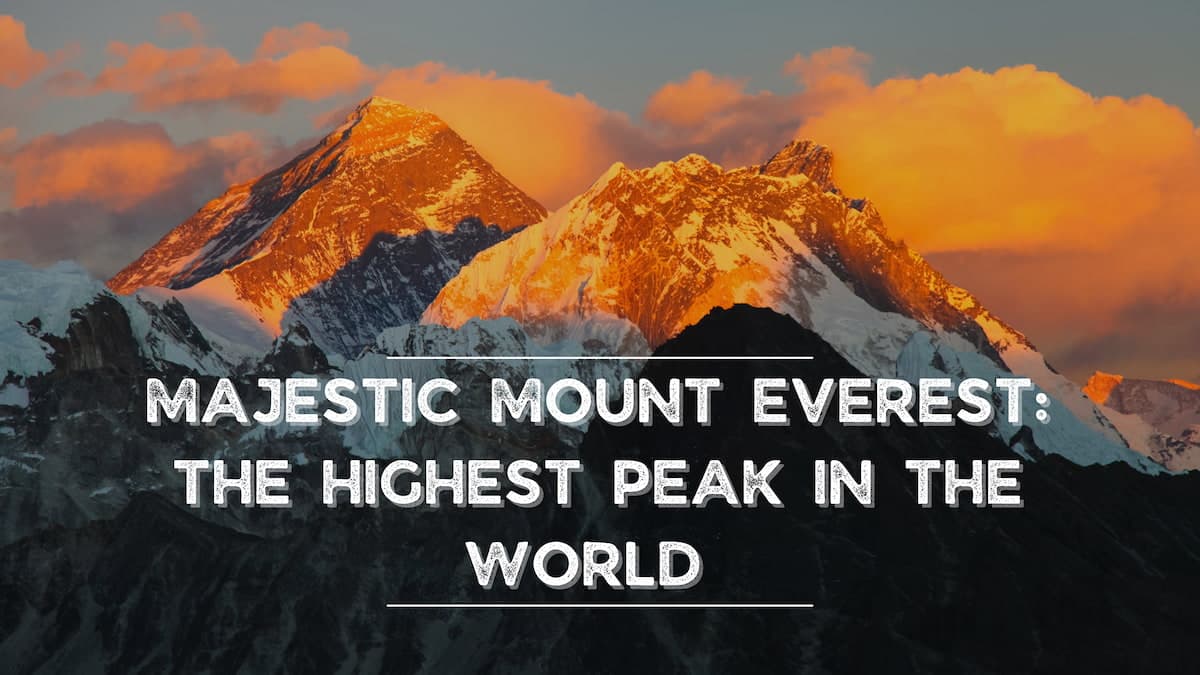

Mount Everest, the highest peak in the world, is located in Nepal. The mountain massif is on the border of Solukhumbu District, Nepal, and the Tibet Autonomous Region, China. There are two base camps of Everest: the South Base Camp in Nepal and the North Base Camp in China. Edmiund Hillary and Tenzing Norgay are the first men to climb Mount Everest. Around 15000 climbers have successfully ascended the summit of Everest since 1953 to 2026. This article is a complete guide of Mount Everest which includes its introduction, location, expedition history and best time to visit.
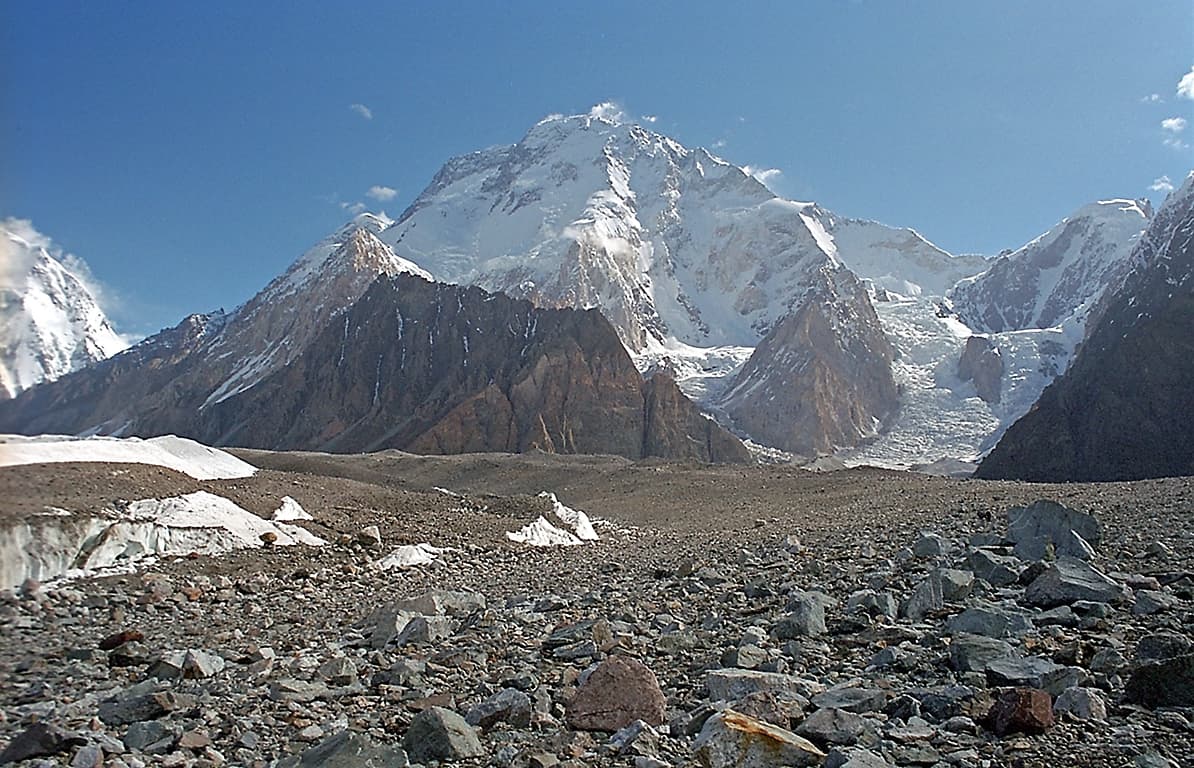
Mount Everest is the highest peak in the world. It is located in Nepal at an elevation of 8848.86 m asl / 29,031.69 feet. It is a mountain peak of the Mahalangur Himal range, a part of the Himalayas that lies on the border of Nepal and China. It is the highest point on Earth, also considered the third pole of the world and a water reservoir that feeds the rivers downstream & the ocean ultimately.
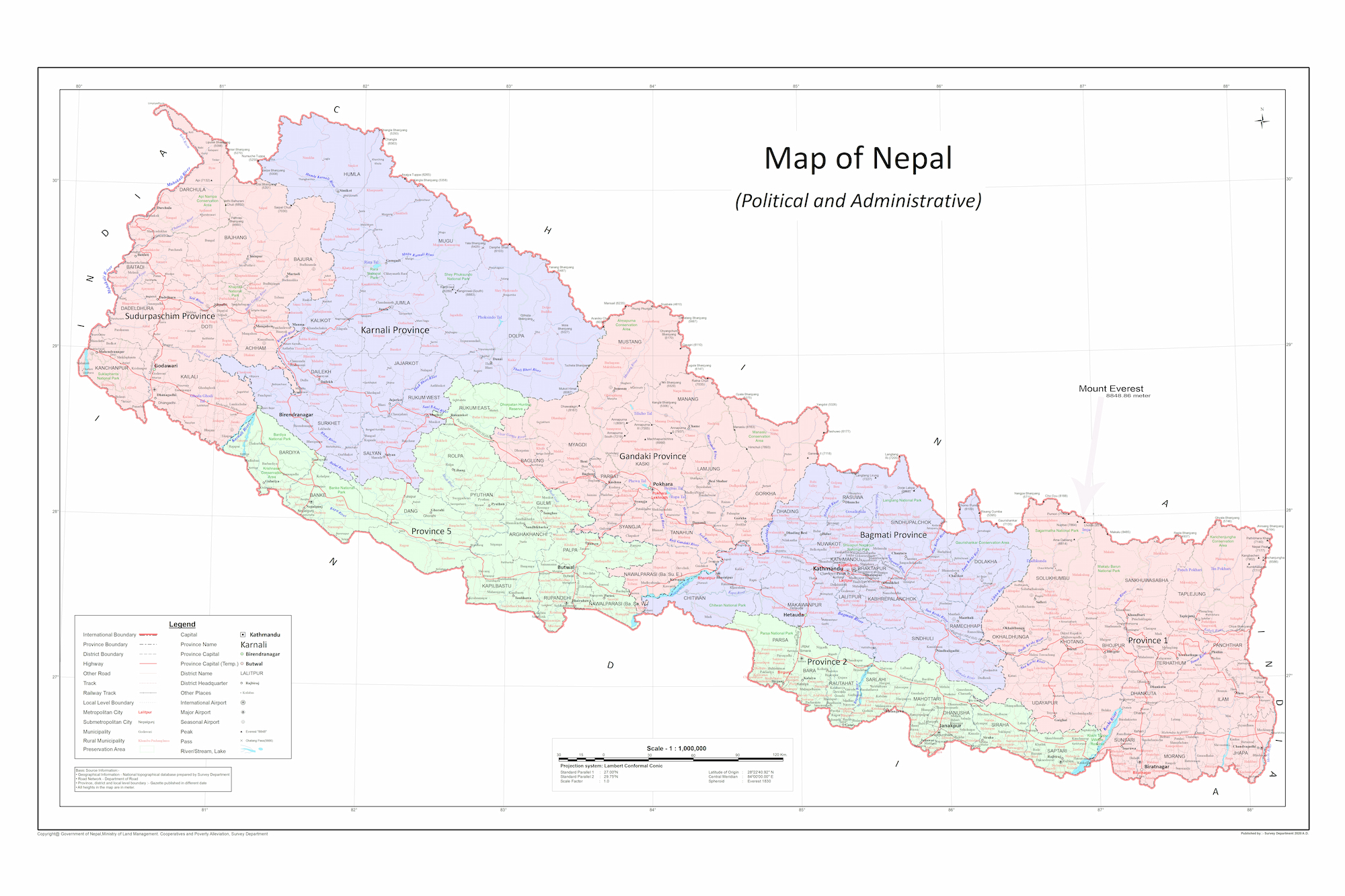
The highest peak was named Mount Everest in 1856 in recognition of the special contribution of Sir George Everest, the surveyor general of the Great Triangulation Survey (nepjol, 2017). It is called as Sagarmatha in Nepali, which is formed from combination of two words “Sagar” and “Matha”. Sagar means sky and matha means forehead, it is also called Goddess of the sky. The authentic Nepali name was given by Baburam Acharya (1888-1971). The Tibetan name of Mount Everest is Quomolungma, and in Sherpa language it is Chomolungma, it means the goddess of the world.
Everest is the pride of Nepal. It helps to recognize the country in the world. Since it lies on the border of India and China, it is accessible to climb the peak from both countries. It is in eastern Nepal and form northern border with China. The south base camp lies in Nepal whereas the northern base camp lies in autonomous region of China. An expedition from the southern face is less challenging than the northern face. The khumbu icefall , death zone (region above 8000 m with thin atmosphere and low oxygen), and the north ridge makes a challenging climb to summit.
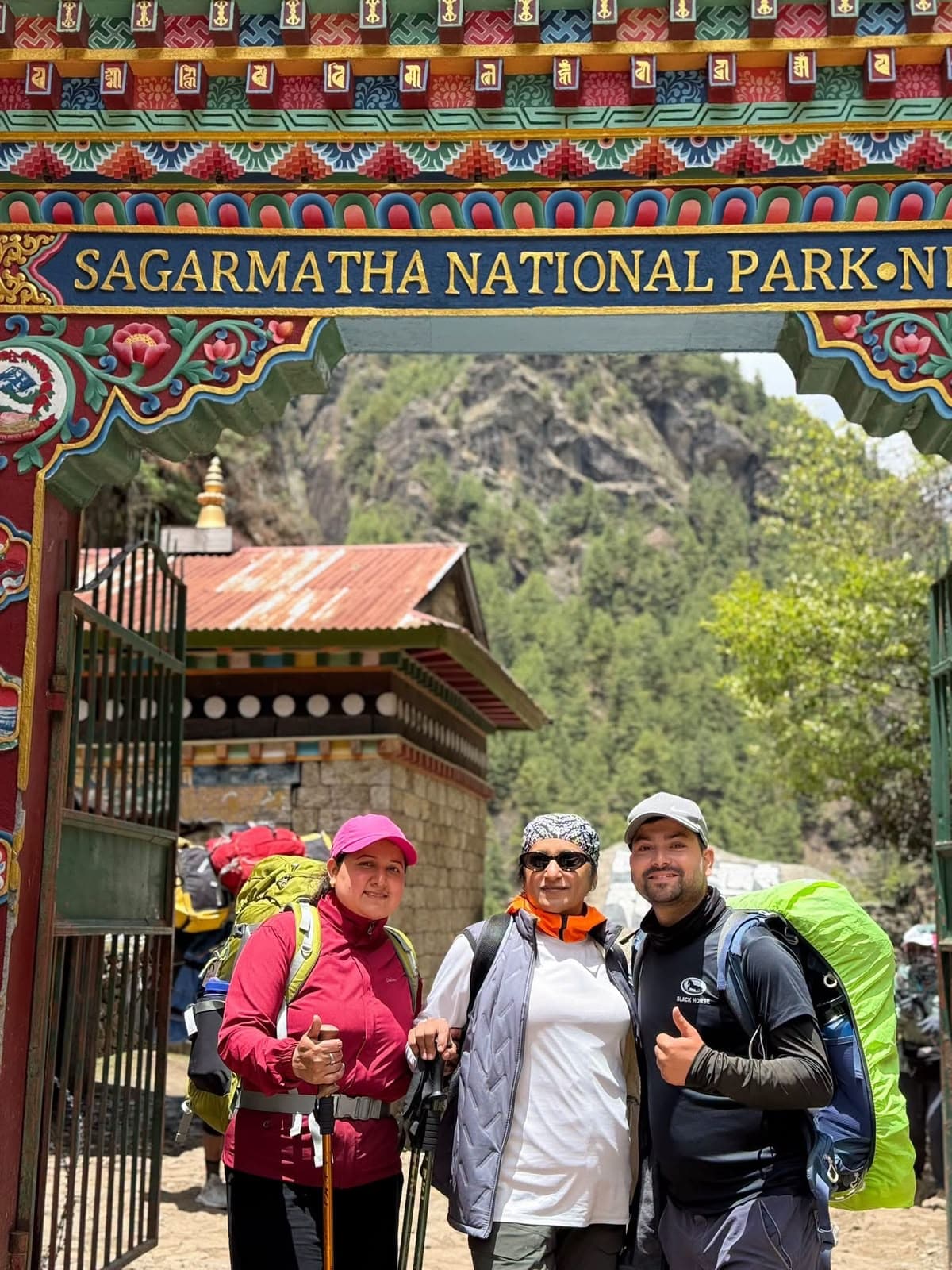
The base of Mount Everest is the most popular trekking destination in the world. Millions of trekkers had done Everest base camp hike to fulfill their dream and retreat themselves. The 12-day trek from Lukla to Lukla is the most adventurous trek that takes to the highest elevation of 5364 m at the base camp and 5644 m on Kala Patthar. Expedition, trekking and Heli tour are popular activities in the Khumbu region.
Mount Everest was formed through tectonic movement of the Indian and Eurasian continental plates. The Indian-Australian plate moved northward from the south and forced downward under the Eurasian plate which forms collision between two plate about 40 and 50 million years ago. Mount Everest is one of the mountain peaks of the Mahalalangur himal which is a mountain range of Himalaya. Thus, Everest was started to rise about 25 to 30 million years ago during Pleistocene Epoch. Everest forms a focal point of tectonic action in the great Himalaya which continues to move a few inches to the north east and rising an inch each year as according to global positioning instruments (Britannica, 2026).
Everest is a multiple layered rock folded back themselves. The rocks on lower elevation consist of metamorphic schists, gneisses, topped by igenous granites whereas the higher-elevation rocks are found to be sedimenary rocks formed from remnants of the ancient floor of the Tethys sea. The sedimentary rock is visible just below the summit pyramid. The base of Everest is surrounded by Changtse, Khumbutse, Nuptse, and Lhotse from west to south.
According to official data of 2020, the accepted height of Mount Everest is 8848.86 meters / 29031.7 feet. It is the highest mountain in the world. The measurement of height started with the great trigonometric surveys around 1840 and 1850s. The last survey was completed in 2020 by the joint effort of Nepal and China.
Brief on the calculation of height of Mount Everest:
The Everest expedition begins in the 1920s, but the successful attempt occurs only after 30 years in 1953 AD. Sir Edmund Hillary and Tenzing Norgay Sherpa were the first climbers to climb Mount Everest. The expedition was from the southern face. The successful attempt to summit brings evolution in the Everest region.
Around 7500 people have summited Everest within over 15000 ascents to date, spring 2026 AD. Many climbers lost their lives on the journey to the summit. The rainbow valley symbolizes the challenge of expedition. A total of 349 people have lost their lives during the journey to the summit, maybe due to bad weather and physical problems. Many lives are out of breath in the death zone, deep crevasse, and even lost in the snow. The successful story overcomes death and breaks records every year.
The timeline of Everest expedition shows that the British Mount Everest Expedition of 1922 was the first team to attempt the summit but returned from 8225 m on the North Ridge. Edward Lisle Strutt was the first man to climb above 8000 m on May 21, 1922. A day later two climbers, George Finch and Geoffrey Bruce, climbed up to 8321 m on the north ridge and made a new record.
Mount Everest Expeditions from the 1920s to the 1990s.
| year | team | Highest elevation | location | remarks |
| 1921 | British Mount Everest reconnaissance expedition | - | North | Mapping the route |
| 1922 | British mount Everest expedition, 1922 | 8321 m | North col | unsuccessful |
| 1924 | British mount Everest expedition, 1924 | 8573 m | North col | unsuccessful |
| 1933 | British mount Everest expedition, 1924 | 8570 m | North col | unsuccessful |
| 1934 | Maurice Wilson | 7000 m | North col | unsuccessful |
| 1935 | British mount Everest reconnaissance expedition, 1935 | 7020 m | North col | unsuccessful |
| 1936 | British mount Everest expedition, 1936 | 7020 m | North col | failure |
| 1938 | British mount Everest expedition, 1938 | 8290 m | North col from west | unsuccessful |
| 1947 | Earl Denmark and Ang Dawa Sherpa | 6700 m | North col | unsuccessful |
| 1950 | Bill Tilman, Charles Houston, Oscar Houston and Betsy Cowles | - | South | Exploratory expedition to Everest through Nepal |
| 1951 | British Mount Everest reconnaissance expedition 1951 | - | South | Could not go higher than Khumbu icefall |
| 1952 | Swiss Mount Everest Expedition | 8400 m | South col | unsuccessful |
| 1953 | British Mount Everest Expedition, 1953 Edmund Hillary & Tenzing Norgay | 8848 m | Summit from south | First successful summit to Everest |
| 1956 | Swiss Expedition | 8848m | Summit from South | Four climbers reach on the summit |
| 1960 | Chinese Mount Everest Expedition | 8848 m | Summit from North | Discounted in mountainnering circles due to lack of strong evidence to believe |
| 1962 | Woodrow Wilson Sayre and three colleagues | 7620m | North ridge | Considered as illegal incursion |
| 1963 | American mount Everest Expedition | 8848 m | Summit from South | Nawang Gombu became first man to summit Everest twice |
| 1965 | Indian expedition | 8848 m | Summit from south | 9 men reached the summit |
| 1970 | Yuichiro Miura | 8848 m | south | Yuichiro Miura skied from the South Col. Six sherpas were died in an avalanche |
| 1971, 1972, and 1973 | International expedition, European expedition, Italy and Japan in 1973 | 8848 m | South | Everest expedition occurs every year |
| 1974 | Tximist and French Mount Everest expedition | 8848 m | south | Six climbers died in an avalanche |
| 1975 | Junko Tabei of Japan | 8848 m | South | 1st women to summit mount Everest |
| Chinese team | 8848 m | north | 9 members from China reach the summit. | |
| 1975 British Mount Everest Southwest face expedition | 8848 m | southwest | 1st ascent on the southwest face | |
| 1976 | British and Nepalese army expedition | 8848 m | south | Ascend to the southwest face |
| American Bicentennial Everest Expedition | 8848 m | south | Summit via the South Col Route | |
| 1978 | Reinhold Messner from Italy and Peter Habeler from Australia | 8848 m | southeast | Attempt summit without supplemental oxygen |
| Franco-German Expedition | 8848 m | south | 15 people reach summit | |
| 1979 | Yugoslav west ridge expedition | 8848 m | south | Climbed from new route to West ridge from Lho La |
| 1979 Swabian expedition | 8848 m | south | Death of two climbers | |
| 1980 | Team from Poland | 8848 m | South | First winter ascent |
| Reinhold Messner | 8848 m | south | 1st solo climber without oxygen tank | |
| Takashi Ozaki and Tsuneo Shigehiro from Japan | 8848 m | North | Full ascent of the North face | |
| Everest basque Expedition | 8848 m | South | successful | |
| 1982 | Soviet expedition, British expedition, Canadian Mount Everest Expedition, | 8848 m | south | successful |
| Marty Hoey from US | 8848 m | North | Death from the north side | |
| Yasuo Kato and Toshiaki Kobayashi | 8848 m | South | Both of them failed to return in bad weather | |
| 1983 | Lou Reichardt, Kim Momb, Carlos Buhler, Dan Reid, George Lowe, Jay Cassell from US | 8848 m | East face | Summit from the east face |
| 1984 | Expedition from 4 different countries | 8848 m | 2 from North and 2 from South | Successful, two climbers died |
| 1985 | Norwegian expedition & Catalan ascent from south without supplemental oxygen | 8848 m | South, north | Three climbers summit from northeast ridge |
| 1986 | Two climbers from Switzerland and first Canadian woman | 8848 m | South | successful |
| 1988 | 9 expedition | 8848 m | south | First paragliding from Everest and successful attempts |
| 1989 | 3 expeditions | 8848 m | south | successful |
| 1990 | 3 expeditions | 8848 m | south | successful |
The expedition continues in 1992, 1993, 1995, 1996, 1998, 1999, and 2000. After then, there is no year gap for the Everest expedition. The avalanche in 2015 killed 18 people at South Base Camp, which is the second deadliest disaster after the 1996 disaster. The new record with 1008 climbers on Everest in spring 2026 is the latest expedition to date.
The best view of Mount Everest can be seen in the early morning from Kalapatthar. The weather remains clear in the months of March, April, May, September, October, and November. Thus, spring and autumn are the best times to view Mount Everest. We can do an early morning hike to Kalapatthar from Gorekshep to have a golden view of Mount Everest. It can be done on the 9th day of the Everest Base Camp trek. Similarly, we can climb Kalapatthar in the evening for a sunset view of Everest.
The highest peak in the world is the ultimate point for adventurous people. Around 7500 people have summited the peak from 1953 to June 2026. Around 349 people lost their lives during the Everest expedition. Millions of people visit the Everest region to get a close-up view of Everest and its surrounding peaks every year. The Everest Base Camp luxury lodge trekking, EBC trek, Everest Three Passes trek, the Gokyo Lake trek, and the Everest Cho La Pass trek are the most popular trekking routes that allow us to view Sagarmatha. Spring and autumn are the best seasons to do the trekking, whereas only spring is selected for a successful expedition.
...