.



| DURATION 4 Days | ACTIVITY Trekking | MAX ALTITUDE | TRIP GRADE |
GROUP SIZE Min. 1-10 Pax. | Accommodation Tea House and camping | TRANSPORT Flight | BEST SEASON N/A |
Are you planning peak climbing in the Everest region? If you are searching for the easiest and shortest peak climb, then Island Peak climbing from Chhukung is the best option. The climbing duration includes only three days. It is different than climb Island Peak after the EBC trek, as we will take a heli flight to reach Chhukung rather than trekking to Chhukung. A well-trained and experienced trekker who already reached Everest Base Camp is recommended for this three-day adventure.
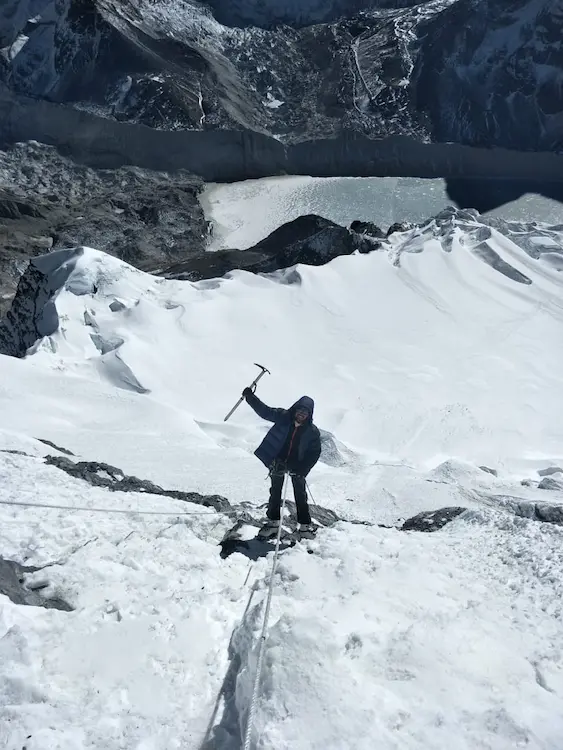
Imja Tse is a 6165 m tall mountain near Everest Base Camp. It is the safest climbing peak in Nepal that gives the best experience for mountaineering on the highest peaks, such as Mount Everest, Makalu, Manaslu, Lhotse, Dhaulagiri, and Annapurna. This three-day adventure can be continued after returning from the base of Mount Everest, the Gokyo Lake trek, or the Gokyo Cho La Pass. It is located in Sagarmatha National Park within Pasang Lhamu Rural Municipality, Solukhumbu District, Koshi Province, Nepal. It appears like an island in the sea of snow and was named Island Peak in 1953 by a British mountaineer. The peak lies in between two glaciers: Lhotse and Imja. The mesmerizing views of Mount Everest, Lhotse, Ama Dablam, Nuptse, Makalu, and Cho Oyu from the summit worth it.
The altitude of Island Peak is 6165 m, which is perfect for training to climb Everest. It is a selective peak climbing in Nepal to gain experience and enjoy the mountain views of the Mahalangur Himal ranges. It is more popular among EBC trekkers, as the interested trekkers can continue peak climbing from Chhukung.
Peak climbing starts after six days trekking from Lukla to Chhukung. We will exclude trekking to base camp to complete the climb on schedule.
Peak climbing begins after we reach Chhukung via trekking from Lukla. Trekking to Chhukung is important for acclimatization. Directly reaching the base of Imja Tse in a helicopter is impractical and increases the risk of altitude sickness.
Mission Summit Treks and Expedition is one of the best trekking companies in Nepal to lead peak climbing from Chhukung. We arrange your accommodation, Lukla flight, trek to Chhukung, Imja Tse climbing equipment, peak climbing training, and a climbing guide. We provide the best guides to make a successful climb to the summit. We have been operating peak climbs since the beginning of the company. If you are also interested in trekking and expeditions, then contact us.
Chhukung, the entrance of Island Peak, welcome us for peak climbing. We can reach Chhukung either from the ascending trail to Dingboche or descending from Gorakshep after trekking to EBC. The trekkers who are revisiting the Everest trekking route for peak climbing can only trek to Chhukung from Dingboche. It takes six days to reach Chhukung from Lukla with acclimatization in Namche. If we are planning peak climbing with the EBC trek, then it takes 10 days to reach Chhukung. We will meet our climbing guide and get a briefing about summiting Island Peak.
The trekking distance between Chhukung and Island Peak base camp is around five kilometers, which takes around three hours. We will trek to base camp and practice climbing and using equipment with our climbing guide. The training is essential for a successful ascent to the summit and descent to base camp.
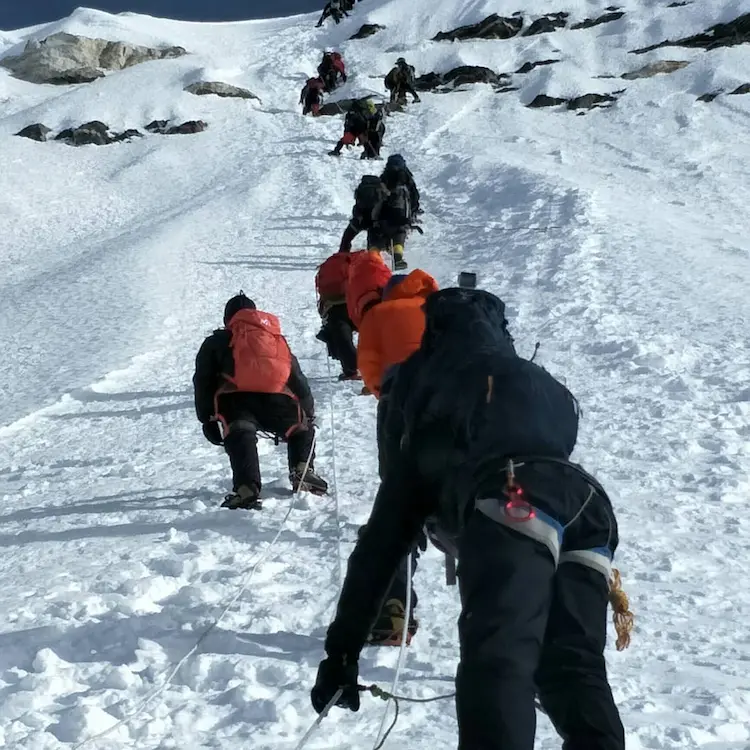
It takes around 6-8 hours to climb the summit from base camp. Generally climbing occurs at night to escape from wind and avalanches due to snow melting and icefall collapse. Starting at midnight and descending in daylight is the best practice of climbing. We will follow the trail made by icefall doctors. Since this peak climbing is less technical and has moderate ascents and descents, beginners can also reach the summit without difficulties.
The entire climbing from base camp to the summit and back to Chhukung takes around 10 to 14 hours. Good preparation and carefulness are important to remain energetic until we return to Chhukung.
loading..
Yes, a beginner can climb the Island peak but good preparation for island Peak climbing is essential. We should do higher elevation trek (EBC trek, Gokyo Cho la Pass trek, Manaslu circuit trek or Annapurna circuit trek) to gain altitude and have successful attempt to the Summit.
We can prepare Island peak climbing by trekking to higher elevation before planning a climb. Walking or running to cover 5-6 km per day before three months of climbing. Engage in physical training like squats, push up, cycling, deadlifts, flexibility exercises, rock climbing are basic preperation for peak climbing in Nepal.
No, it is not hard to climb Island peak. It is labelled as 2B grade climbing with less technical ascends and descends. A well-prepared trekker can climb Island peak easily under the guidance of climbing Sherpa. We should do training for using climbing equipment in Island Peak base camp.
It cost 300 USD to climb the Island peak in spring season and 200 USD in autumn season. This includes all required permit costs for climbing the Island peak from Chhukung only. Additionally, the Lukla flight ticket and accommodation up to Chhukung requires more expenses. Overall, we need around 1600 USD for trekking to Chhukung, climbing Island peak, Lukla – Kathmandu flight fare and retuning. It takes 13 days for round trip to Chhukung, Island peak and returning Kathmandu. The cost include 1 guide and 2:1 porter, accomodation, three meals a day during the trek as well.
The Island peak climbing permit from Mountain Association Nepal is 250 USD in spring season and 150 USD in Autumn season. The cost is higher in spring season due to being peak season of mountain climbing in Nepal. The days remain longer in spring season with relatively higher autumn season.
No, anyone cannot climb Island Peak. A well trained trekker can only climb Island peak. It is best peak climb for beginner but proper preparation and trekking is necessary successful climb to summit and descend safely.
Yes, a beginner can do Island Peak. A beginner should have best preparation and training to climb the peak. Unless of confidence, stamina and trekking experience, no one can climb mountains.
It takes around 14-16 hours to complete Island peak climbing. The climbing route, distance and duration vary based on services and blockage on climbing route. The breakdown of Island peak climbing is shown in table below: Climbing sectionClimbing distanceIsland peak climbing durationAscend: Island peak base camp to Island Peak high camp 1.5 to 2 km1- 2 hourAscend: Island peak high camp to Island peak summit3.5 to 4.5 km6 to 8 hoursDescend: Island peak summit to Island peak base camp5 to 6.5 km4 to 5 hours
The best time for Island Peak is pre-monsoon and post-monsoon. Spring and autumn are the best seasons of the year for climbing peaks in Nepal. Mid-March to mid-May and mid-September to mid-November are suitable times for climbing and trekking in Nepal. The moderate temperature and pleasant weather make climbing easy in autumn and spring. The days in spring are longer, and the snow surface remains suitable for climbing; therefore, it is most preferred for peak climbing.
We require three permits for Imja Tse climbing. Nepal Mountaineering Association (NMA) permit for Island Peak, Sagarmatha National Park permit, and Khumbu Pasang Lhamu Rural Municipality permit to enter the national park and Khumbu region.
The peak climbing cost is different in different seasons and for different nationalities. The cost of peak climbing is higher in the spring season and lower in the autumn season due to longer daylight and good conditions of snow for climbing.
Permit cost for Imja Tse climbing as per season
| Permit | Permit cost | Time of climbing |
| Nepal mountaineering Association permit | $250 | Spring (March, April, May) |
| $150 | Autumn (Sept., Oct., and Nov) | |
| $70 | Monsoon (July to Aug) and winter (Dec to Feb) | |
Sagarmatha National Park Permit
| 3000 NPR for foreign | Throughout the year |
| 1500 NPR for SAARC nations | ||
| 100 NPR for Nepali | ||
| Khumbu Pasang Lhamu national park permit | 2000 NPR for all people |
The difficulty is rated from moderate to hard, as it is labeled as 2B in the alpine grading system. We need certain mountaineering skills with knowledge on using ropes, a harness, and crampons to climb the peak. It is the best mountain for practicing climbing on the snowy slopes of technical mountains.
The altitude above six thousand is one of the difficulty factors that raises the risk of altitude sickness. We need to walk continuously for 6 to 8 hours on the snow to reach its summit and a further 3-4 hours to return to the base camp.
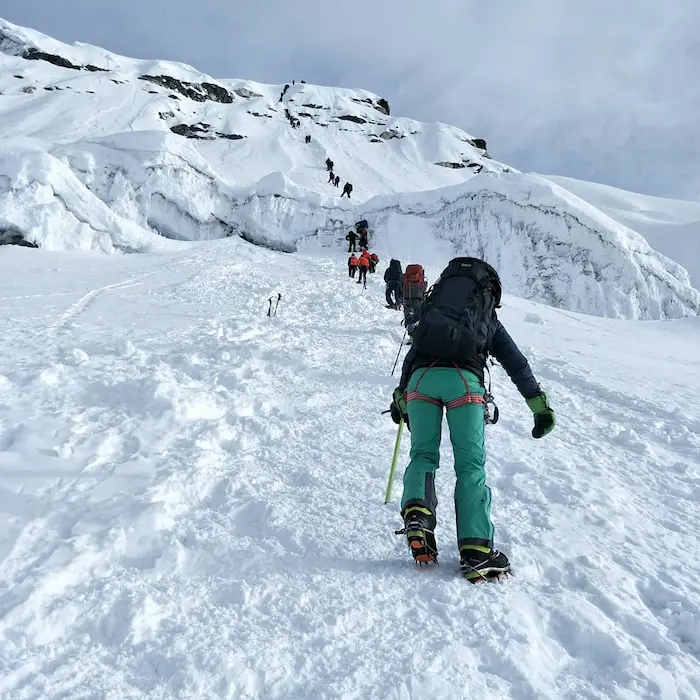
The glacier crevasses and slippery snow are the challenges where we need to be more careful. The use of ropes and crampons is essential to pass through these difficulties.
The temperature on the summit remains below -20℃ as a difficulty factor that can be minimized by wearing thick clothing and descending to lower elevations.
The long duration of climbing can be challenging unless we train our bodies properly. It takes around 16 hours to climb the summit which occurs continuously. So, it will be a tough job to walk over snow at high elevation.
Beyond the difficulties, a beginner can climb this peak. Most importantly, one should have good preparation and practice rock climbing, hiking, and trekking to gain the achievement.
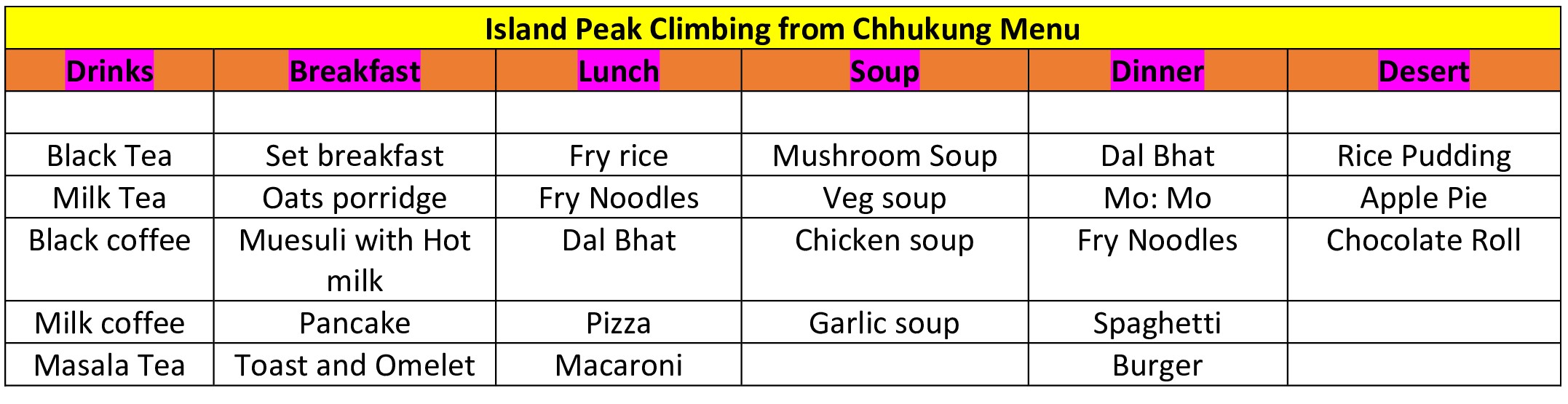
The food will be prepared by the expedition team in base camp and high camp. Instant foods like noodles, pasta, rice with canned or dried vegetables, soup, lentils, boiled eggs, and dry fruits are more common in camp. We will stay only one day at base camp, where we will have our lunch and dinner. We will start climbing to the summit at midnight. We should carry snacks and water with us so that we can have some food while descending from the summit to base camp.
After returning to base camp, we will have our lunch and return to Chhukung for a night stay. We will have selective food for dinner in Chhukung. Mo:mo, chowmein, Nepali thali (dal, rice, pickles, and pappad), spaghetti and pasta, pizza, egg items, and burgers are common in tea houses of Chhukung.
Acute mountain sickness occurs above the elevation of 3500m. Since the Island Peak summit is 6165 m, there is a high risk of altitude sickness if we do not acclimatize before reaching base camp at 5087 m. Altitude sickness is uncertain for both experienced and beginner hikers. Therefore, we should be alert to its symptoms while climbing the peak. We should return to a lower elevation if we feel uneasy, have a severe headache, or have difficulty in breathing.
Symptoms and remedies of altitude sickness
Remedies
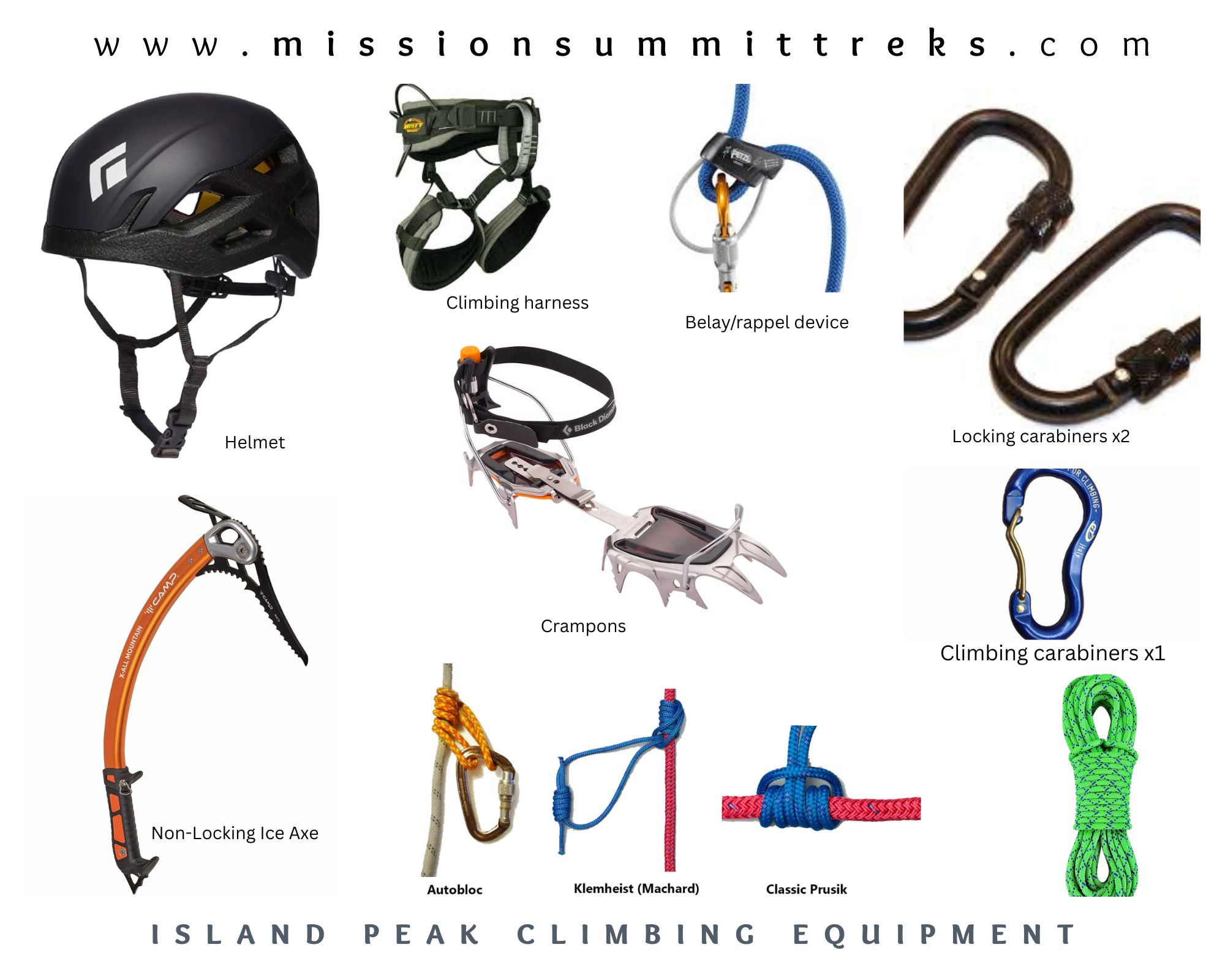
Trekkers should have appropriate trekking gear for both trekking and expedition. If you missed any essentials, you could also buy it in Chhukung before heading to Island peak base camp.
No Reviews