Punam Phuyal
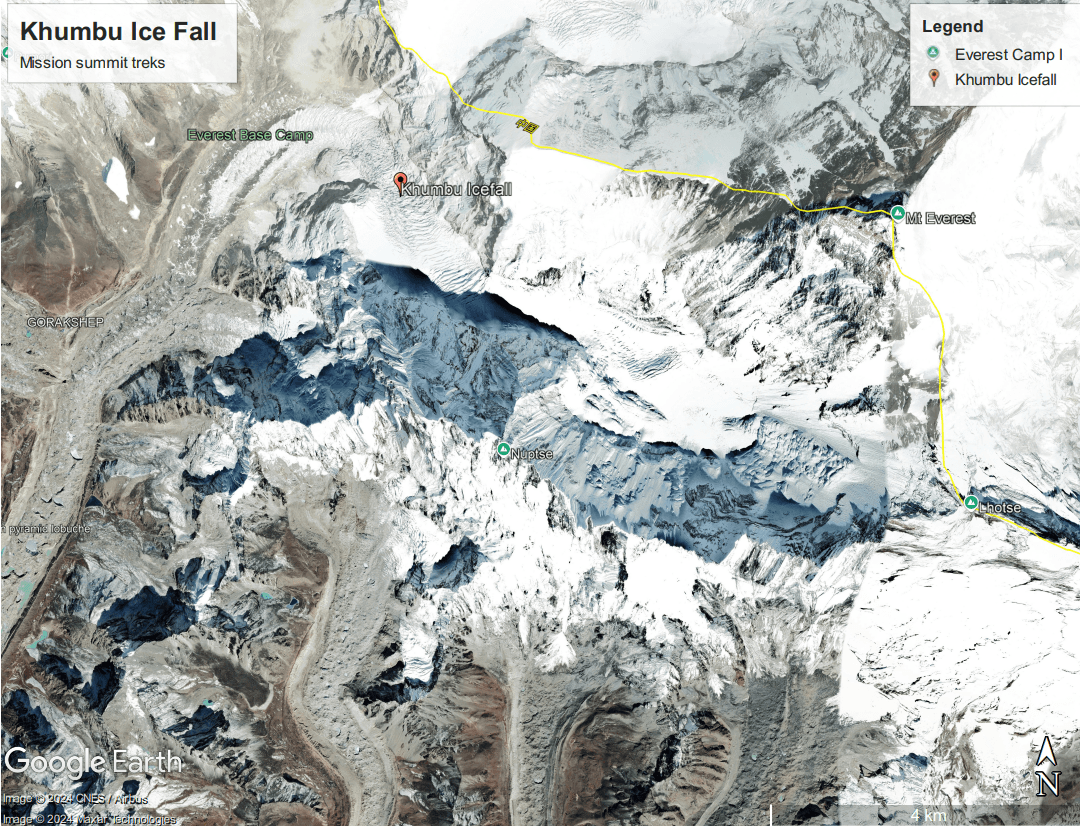

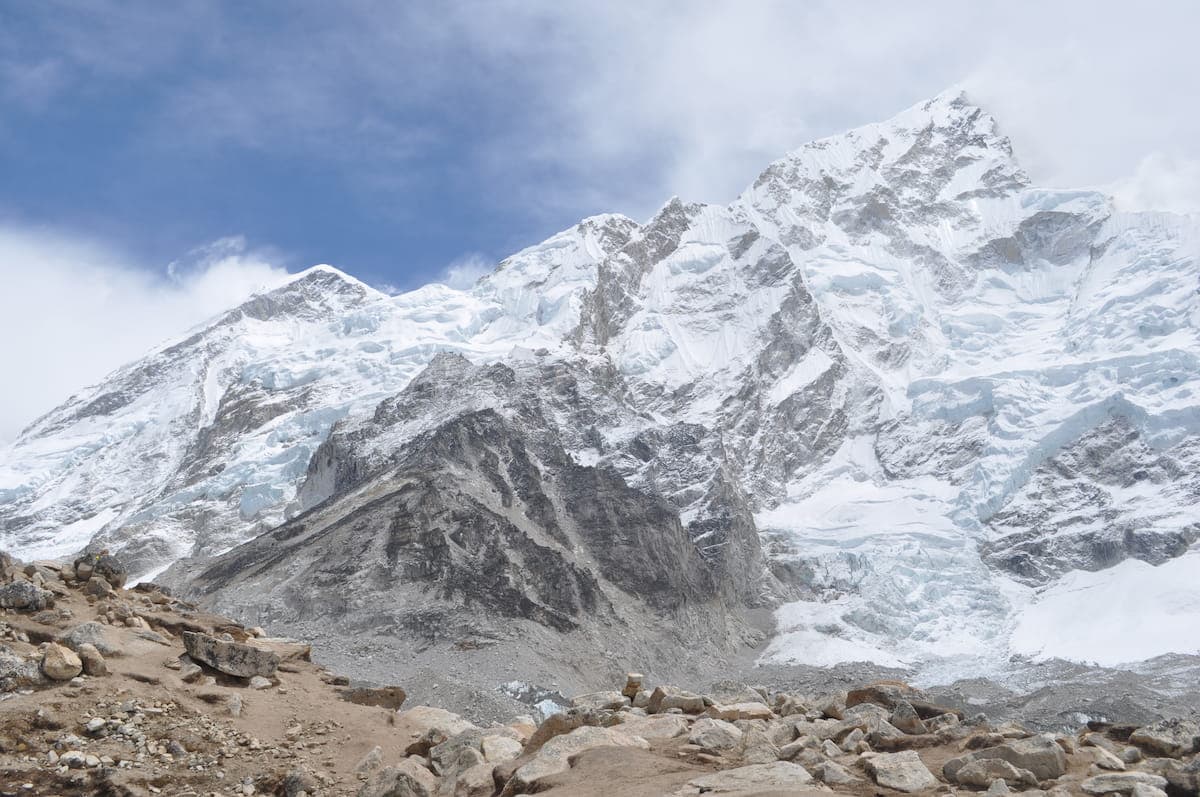
Khumbu Icefall is the ice stream with a large bulk of ice of Mount Everest, resulting in the Khumbu Glacier at Western Cwm at an elevation of 5468 m. The ice bulk is around 2.57 km long and consists of crevasses up to around 300 feet down. The crevasses separating the ice bulk at certain distances are dangerous zones for climbers. The head of the icefall is around 1 km from South Everest Base Camp, while we can see the Khumbu Glacier from Gorakshep.
EBC trek route from Lobuche to Gorakshep encompasses the moraines and rocky trail of the glacier. We can encounter the snowy river (Khumbu Glacier) that seems constant at a place as a miracle during the trek. We can walk over it and enjoy the heavenly beauty of Mount Everest and its surrounding peaks.
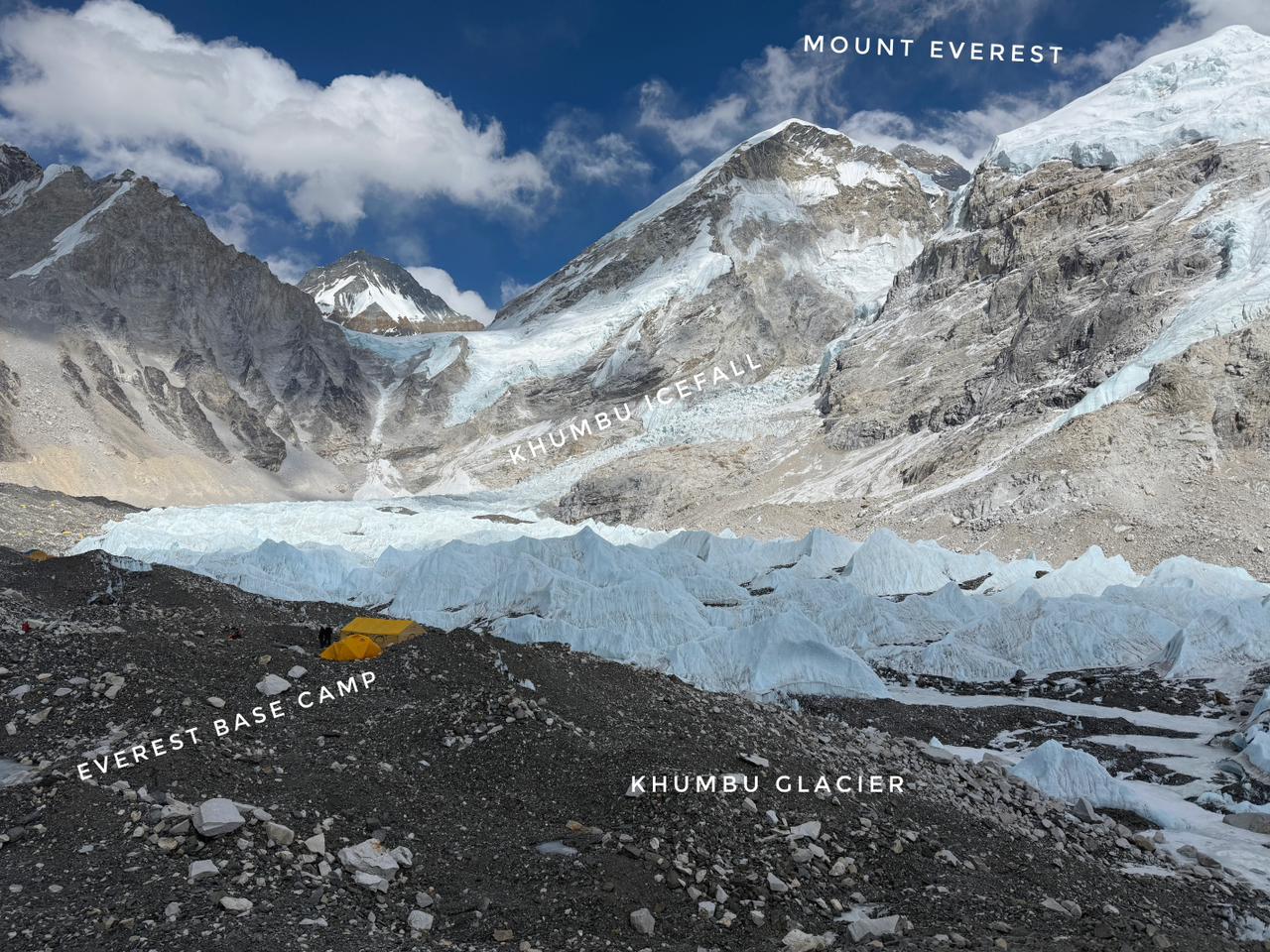
Everest Khumbu icefall is a challenge during Everest Expedition. Climbers should cross the Khumbu icefall crevasses with the help of a ladder and rope to reach Everest Camp I from Everest Base Camp. The ice blocks and crevasses between them are the most dangerous part of Khumbu Icefall. Uncertain movement of ice blocks may create an avalanche.
The uncertain movement of seracs resulted in an avalanche that killed 16 climbers on Khumbu Icefall on April 16, 2014. The Bulk of ice fell from 5800 m and created an avalanche on the southern part of Mount Everest. Around 50 climbers have lost their life in Khumbu ice fall due to avalanche or other accident since 1953 to 2023. Therefore, Khumbu Icefall is so dangerous. The slippery ice blocks and crevasses are the main reasons that make Khumbu Icefall a danger zone for the Mount Everest Expedition from the south.
The climbers having an official Everest climbing permit can ascend to Khumbu icefall. They should follow the route of icefall doctors to be safe and successful climb.
Everest base camp trekkers are not allowed to climb the icefall but can enjoy its frozen beauty from Everest base camp. The trekkers, however, can walk over the Khumbu glacier and experience the breathtaking view of the icy wonderland without any risk.
The legends having the deepest knowledge on snow and capable of making the path on the icefall are called icefall doctors. They are experienced Sherpas who can identify the safest trail for the Everest expedition team. Since the Khumbu Icefall is moveable, the path made by icefall doctors keeps on deteriorating, and the doctor’s team remains active in checking the trail to renovate it every day. Their effort is to give safety to climbers. They tie ropes and ladders on blocks of ice for ascending to Everest Camp 1 and descending to Everest Base Camp.
Icefall doctors analyze the safest site and avoid the zone that has a chance of avalanches. They tend to identify the hidden crevasses, movable blocks, and fragile snow blocks, the risk of icefall. They are experts at selecting the best route to reach camp 1. None of the climbers can pass the Khumbu Icefall without icefall doctors. There are two teams maintaining the route on alternate days after setting up the Everest expedition route. There are thousands of climbers who want to reach Everest Camp I and they follow the route of the icefall doctors. If the climbers face any difficulties, then doctors help the climbers and bring them to a safe site.
The Icefall doctors investigate and make the route to Everest Camp I by setting ladders and ropes before the beginning of the climbing season (March, April, May). The climbers walk on the developed route via Sherpa - Icefall doctor.
Khumbu Icefall is the most iconic and dangerous section of the Everest expedition route. It requires the best skill and courage for high-altitude mountaineering. For the Everest Base Camp trekkers, the mind-blowing view of Khumbu Glacier, Khumbu Icefall, and the everlasting beauty of the mountains is worth it.
...